Posts

Metamorphosis :: Retrospective

Image
Gregory Samsa wakes up to see himself turned into an insect. I llustration by Richard Johnson. It's my routine: I go to sleep, prepared to repeat the same old daily routine or work. But, when I open my eyes, I cannot seem to get up. As I look down, my arms and legs are turned into a bug’s. Even my body has become hard and resembles that of a beetle/centipede. Now, what do I freak on about first? My body that doesn't look human anymore? The fact that my body hurts and cannot move? Or my work and the morning train that I have surely missed? Gregory worries about the latter and the consequences that will follow if he misses this day or even dares to show up late. It takes a unique level of conditioning where one discards their own wellbeing for work. Written in 1912, I am not sure if Kafka’s time had corporate toxic work culture but he was able to accurately predict and satirise a way of living which would be the norm 100 years later.  Myself, my peers and even my seniors have emb...

Breathe.

Image
Render by Author. Change always hits you from around the corner. It’s all smooth sailing to the goal till everything turns upside down. And then you have to have to stop pick up the pieces that remain and keep walking. Or sometimes change the goal because the said goal is impossible to reach now. It is demotivating and people will usually fall in a slumber or a pit of self-pity. For me it was my own self-hatred returning, It takes a long time to look myself in the mirror and blame myself for the situations that have come forward.  I know the person on the other side feels the same if not worse. Nevertheless, somewhere my heart does not want to acknowledge that. My heart takes for granted that it’s always more valid that it is the one that aches and nothing else. Is it romanticism then? That will make me be content with being miserable. Or is it the fact that somewhere, I have grown to think that to succeed in something, it really takes someone to be awful; either in his circumsta...

On Morality

Image
What part of myself makes me wake up every day, attend to my hygiene, eat breakfast and head out to catch my bus to work? Over 99.9% of the world shares this trait with me; who want to survive and provide for the people they care about and continue doing the same every day. This is including a minority of sociopaths who can go out of their way to hurt others indirectly in order to further themselves. A notable mention of this phenomenon for myself was in May 2020, when the country locked down and mass hysteria filled the news and streets. I was lucky to live with three other people with whom I shared this conundrum. Every day was somehow a positive start for us who came together to do basic tasks like figuring out where to get groceries from and praying for when will the alcohol shops open again. The Haywain by Hieronymous Bosch c. 1490-9 Bosch, inspired from religious teaching, would paint scenes of people rejoicing in heaven, living on earth and suffering in hell. These were meant to...

The fault in the Sassoon Docks Art Festival

Image
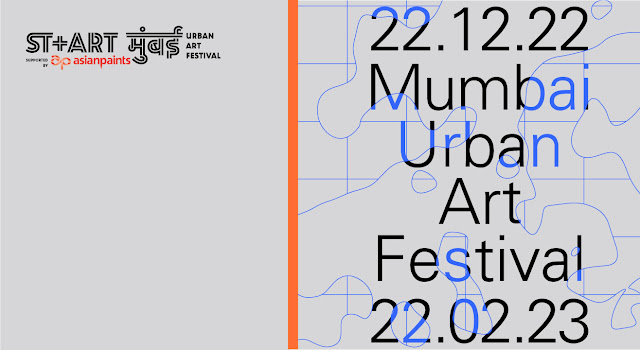
  Poster for the Mumbai Urban Art Festival 2022-23 by St+art Foundation retrieved from paytminsider.com Recently I had the fortune to visit the Mumbai Urban Art Festival 2022-23. This was the second year of the festival being hosted in Sassoon Docks, Mumbai. Sassoon Docks is a fishing port for the koli fishing community, which also includes a bustling fish market, fish related industries and car garages on the site. The art festival is beautifully integrated in the negative spaces of the site, existing in the voids of the daily. The art installations took visual-based forms, where the clear bias for Instagram bloggers was apparent. The installations retained their social message along with their visual flair. The festival in its nature is open-to-all. However, what was common to see an overarching majority of teen to young adult audience who were extremely eager to take a photograph for their social media platforms and covering as much ground as possible in the shortest amount of t...

My visit to the Gun House, Ahmedabad by Charles Correa

Image
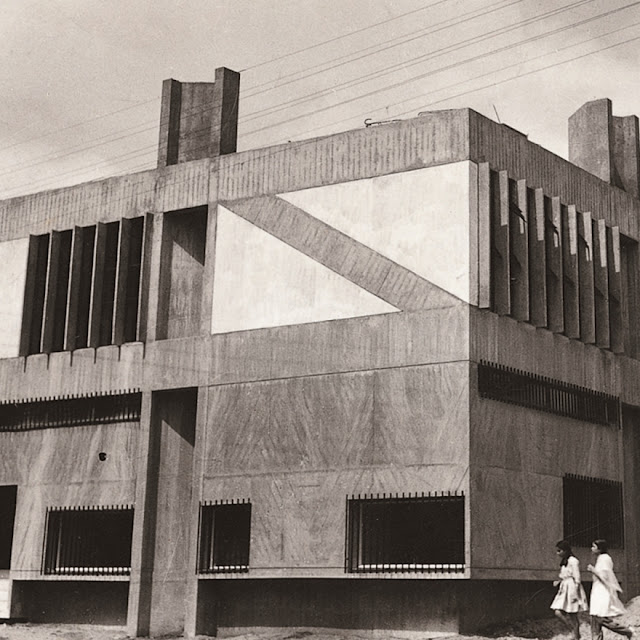
 Gun House as built in 1960, copyright Charles Correa Associates, courtesy of Charles Correa Foundation * After wrapping up my fellowship at the Charles Correa Foundation in Panaji, Goa, I needed a time-off to think about what I was going to do next. After listening to about a hundred different versions of my future from everyone around me, and disagreeing with all of them, I returned back home only to quickly elope to Gujarat for a well-earned time off. Amongst the places I got to visit & the people I got to spend time with, one experience took centre stage for me. Working on the Correa Archive, I had developed a good understanding of Correa’s work. One such was the Gun House, and knowing I will be so close to it on this trip; I had to make it a must to go and see it. The idea of the Gun House, from its name, shape, to the stories of its current fate brought tremendous interest to my mind. It is rare to see a work of a significant architect that goes through such massive deg...

Charles Correa - Mythic Image

Image
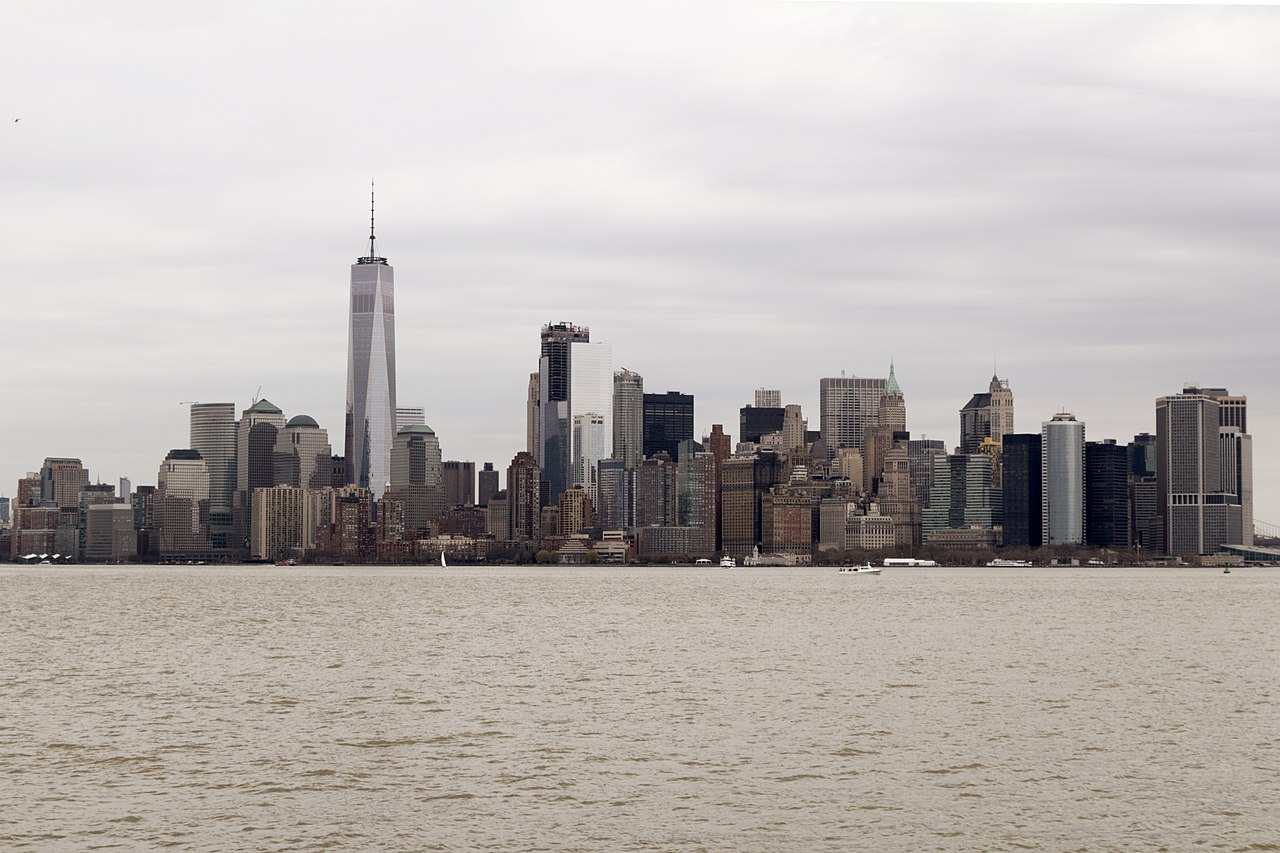
Manhattan New York as seen from a boat returning from Ellis Island by John Salatas, 15 April 2017. Retrieved from Wikipedia Commons. This essay is in continuation to reviewing A Place in the Shade by Charles Correa.  The essay starts by letting us know that Correa has become a part of the steering committee in the Aga Khan award. This opens him up to the contemporary outlook of the architectural professional.  Correa asks what the mythic image is, and the value it holds in the mind of the architect. In a way, it's an extremely helpful ruck sack of ideas and concepts that an architect relies on to come up with solutions for the design. But, at the same time, is a curse that limits the architect to critically look at the site and the context that needs addressing. Constantly with Correa, we see him value and fall back on this topic of site context and its climate. Correa refers to Islamic architecture and its spread to the east and how it moulded and reinvented itsel...

Decoding Le Corbusier through Charles Correa (Part 2)

Image
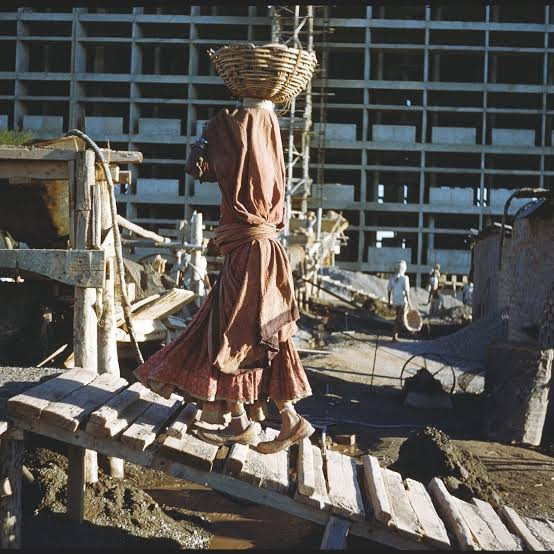
In 1956, a woman carries cement at Le Corbusier’s Capitol Complex, Chandigarh, India, in front of the Secretariat. Photograph by   Ernst Scheidegger, via Museum of Modern Art, New York. This is in continuation to reviewing Charles Correa's book, A Place in the Shade.   At 'Celebrating Chandigarh' symposium 2002, Correa finds himself talking and explaining about the need and the sheer stroke of genius that Corbusier was. And how lucky India was to invite and involve this great architect and visionary in its inception as a country. It is no doubt that Corbusier's involvement paved the path to all modern architecture in India but the amazing fact was that he respected India's culture, something Correa also values in his principals. Corbusier through this, was able to build the new architectural style that put India in the cutting edge of architectural marvels; where architects from around the world were trying to replicate this technology and design seen in...

Decoding Le Corbusier through Charles Correa (Part 1)

Image
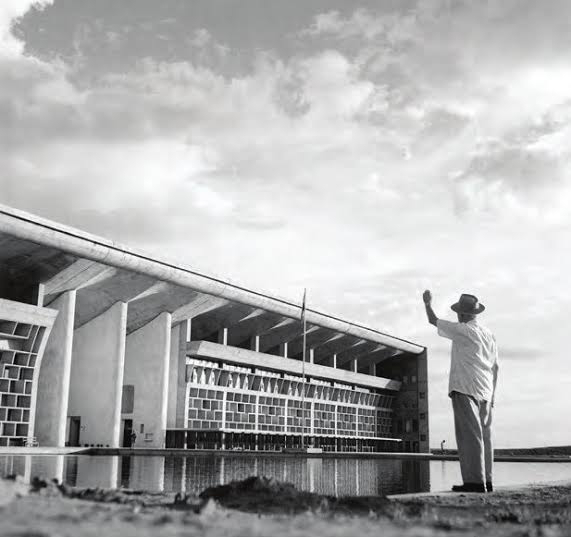
(Above) Le Corbusier looking towards the High Court Building’s main façade. This is continuing the review of essays by Charles Correa in his book, A Place in the Shade.  To claim that Correa is a free thinker would be an understatement. The man can be both, a harsh critic and a benevolent supporter and for the case of Le Corbusier here, he is both Through Chandigarh's Capital Complex, Correa strips Corbusier of every layer showing every little sentiment the man shared in designing buildings and what he seemingly ignored in his quest. Corbusier had the task of making this newly independent country's newest city, all the while establishing the language of architecture for the coming future.  Correa introduces himself to the reader before the critique and praise of Le Corbusier, in a way that gives credibility to the man. From the ideals of climate, culture, material, design and more. Charles Correa is no preacher, but the embodiment of a practitioner with a rich set ...

A Place in the Shade by Charles Correa - Introduction

Image
As I sat down with a copy of the Place in the Shade and read the introduction text by Correa, it prepared for the journey through the thoughts of the Greatest Architect of India. Correa's words stand as strong as time itself as I would realise while reading this book. Knowing full well that I'll have to read this at different points of my life; and that with every read, Correa would tell me something new every time through those same string of words. Correa starts off the book with a superhero origin like story of the phenomena that unknowingly shaped him into the designer at the world knows him now as. Correa talks about the skill of imagination as a child customizing train tracks into complex layouts for his amusement and softly transitions to the topic of architectural design while traversing the topics of film, drama, Chinese gardens and interior design here we see Charles Correa, someone who has practiced and mastered the use of the Ritualistic Pathway talk abo...

The New Landscape by Charles Correa, 1985

Image
The following are some thoughts and ramblings that went across my mind when reading the The New Landscape by Charles Correa. Picking this book up after my completion of the course of architecture was a huge tragedy. I can only imagine how much of a better sensitivity and realness my designs could have portrayed in their conception, which eventually were superficial at best. The book is rightfully said as a must read for every architect/planner willing to practice in India and the ideas and lens of critical thinking are a boon to the profession.  The fact with building the urban world is the higher density that comes along with it. And to bring this to reality, to build forms of over 4 stories, exponentially increases the cost of construction due to the use of RCC. This ultimately marks the price of housing to rise leading to the outcome being only  affordable to the upper and middle class, forcing the lower class to move to the street.  Indian cities, for exam...

Charles Correa used film as a medium to raise awareness around urban issues

Image
Ever since the expansion of transport networks, cities have become one of the most versatile machines for human advancement. And as time has moved on, so has the mass and numbers of these highly efficient cities around the globe. Along with this massive growth, fallacies in this machine have become apparent. The study of urban architecture sought to understand and regulate the exponential spread of cities and made an effort into bettering the lives of the people, who serve as cogs in the city infrastructure. Charles Correa’s high intellect and excellent observation skills are well known through his works, but another remarkable skill of Correa was the language in which he was able to communicate his learnings to others. An architect is disconnected from the commoners, the use of complex drawings and language structure feels alienating except for the members of the architecture fraternity. Correa observed that at the face of any urban issue, the stakeholders that get hit the hardest are...